
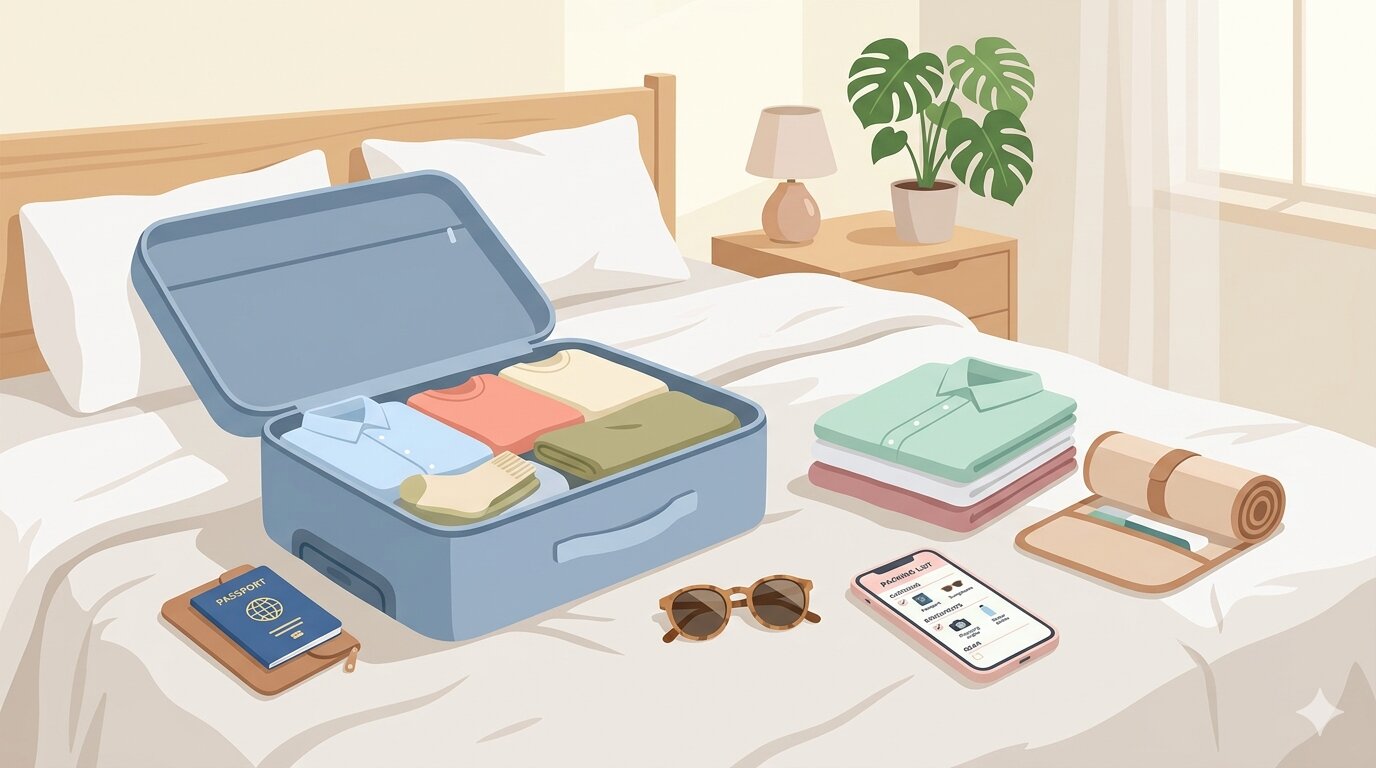
You're at the airport and realize you forgot your adapter. Or you arrive at your hotel and discover you packed three t-shirts but no underwear for a week-long trip. We've all been there — and it's almost always because we packed in a rush without a real system.
The good news? Forgetting things when you travel is completely solvable. You don't need to be an organized person. You just need a method that takes the guessing out of packing.
Why Mental Checklists Fail
Most people pack by walking around their house and thinking about what they might need. The problem is that you're relying on memory, and memory is context-dependent. You'll remember sunscreen while you're in the bathroom but forget your charger because you don't see it until you need it.
Mental checklists also don't account for trip-specific factors. A weekend city break and a two-week beach holiday need completely different items. Trying to figure it all out in your head while packing the night before a 6 AM flight is a recipe for forgetting something important.
The Category Method
A simple framework that works for most trips is to pack by category rather than by room. Walk through these groups:
- Clothing — Tops, bottoms, underwear, socks, sleepwear, outerwear
- Toiletries — Toothbrush, deodorant, skincare, medications
- Electronics — Phone charger, adapter, headphones, power bank
- Documents — Passport, boarding pass, insurance, reservations
- Activity-specific — Swimwear, hiking boots, formal wear, gym clothes
Going category by category forces you to think about each group independently, instead of scanning your bedroom and hoping you spot everything.
The Quantity Trap
One of the most common packing mistakes isn't forgetting items — it's getting the quantities wrong. Packing seven outfits for a four-day trip wastes space. Packing two pairs of underwear for a week creates a problem.
A good rule of thumb: count your nights, then add one. That's how many sets of underwear and socks you need. For tops, you can often get away with fewer if you layer. For pants, two or three pairs usually cover any trip under two weeks.
Build a Reusable Packing List
The biggest time-saver is having a base list you can reuse. After your next trip, take five minutes to write down everything you packed that you actually used. That becomes your template. Before each future trip, you just review the list and adjust for the destination and weather.
You can keep this in a notes app, a spreadsheet, or a dedicated packing app. The format doesn't matter — what matters is that it exists and you use it.
Packing Apps Worth Trying
If you'd rather skip building a list from scratch, several apps can generate one for you based on your destination and trip details:
- PackPoint — Enter your destination, dates, and activities, and it generates a packing list based on weather and trip type. Clean interface, has been around for years.
- Packr — Similar concept with 24 pre-defined activity types. Learns from your previous trips and adjusts suggestions over time.
- Auto Pack — Takes a different approach: you describe your trip in plain language (like "Portugal in May") and AI figures out the climate and activities. It suggests items from your own personal item library, ranked by relevance, and calculates quantities automatically.
PackPoint and Packr work well if you want quick, template-based suggestions. Auto Pack is more personalized since it builds on your own item library rather than a generic list — meaning it'll suggest the specific jacket you own, not just "a jacket."
The Night-Before Rule
Whatever system you use, give yourself one rule: never pack the morning of your departure. Pack the night before, then do a quick walk-through in the morning. This gives your brain a chance to catch anything you missed while you sleep — you'd be surprised how often you wake up thinking "I forgot to pack the adapter."
Quick Recap
- Don't rely on memory — use a list
- Pack by category, not by room
- Count nights + 1 for underwear and socks
- Save your list and reuse it next time
- Pack the night before, review in the morning
Packing doesn't have to be stressful. With a basic system in place, you can pack in 15 minutes and leave knowing you haven't forgotten anything.