
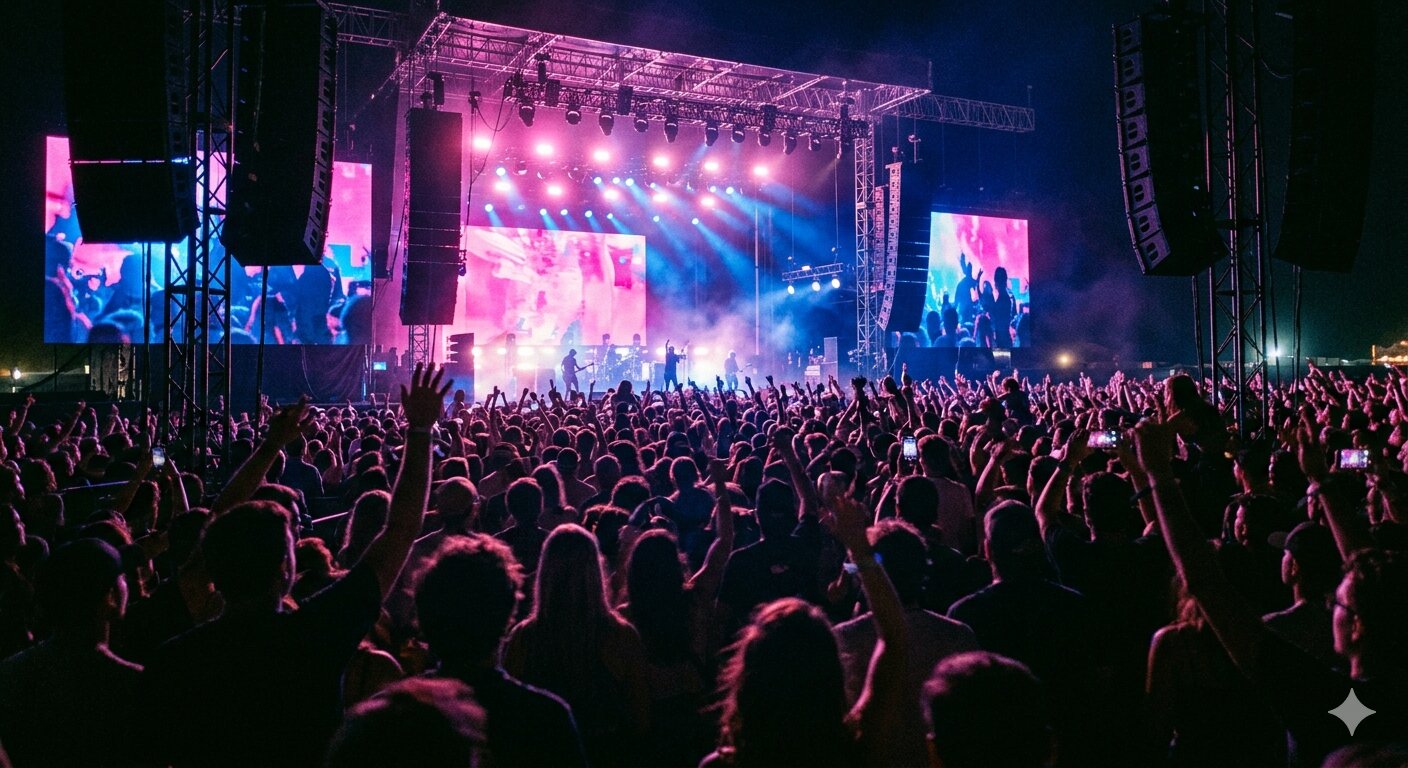
Live music is one of the best experiences out there. But here's the uncomfortable truth: most concerts, festivals, and club nights are loud enough to cause permanent hearing damage — and you often don't realize it until the next morning when your ears are ringing.
That ringing (tinnitus) is a sign that damage has already been done. The good news is that protecting your hearing at events is easy and doesn't mean missing out on the experience.
How Loud Are Concerts, Really?
The average concert runs between 95 and 115 decibels (dB). To put that in perspective:
- 85 dB — The threshold where prolonged exposure starts to risk hearing damage
- 95 dB — Safe for about 50 minutes. A typical bar with live music.
- 100 dB — Safe for about 15 minutes. Mid-size venue, close to the speakers.
- 110 dB — Safe for about 2 minutes. Large concert near the front row or at a festival stage.
- 120 dB — Threshold of pain. Rare at concerts, but possible at very loud events.
Most concerts last 2–3 hours. At 100 dB, that's over 10 times longer than what's considered safe. Even a single concert without protection can cause temporary or permanent damage.
Why Earplugs Don't Ruin the Music
The most common objection to wearing earplugs at concerts is that they'll muffle the sound. That's true of cheap foam earplugs — they block high frequencies more than lows, which makes everything sound dull and boomy.
Musician's earplugs are different. They're designed with acoustic filters that reduce volume evenly across all frequencies. The music sounds exactly the same, just quieter. Many people find they actually hear the music better with them in, because the volume is at a level where their ears aren't overloaded.
Good musician's earplugs cost between $20 and $40 and last for years. Brands like Eargasm, Loop, and Etymotic are popular choices. If you go to concerts regularly, they're one of the best investments you can make.
Pick Your Spot Wisely
Where you stand in a venue matters more than most people realize. Sound intensity follows the inverse square law — roughly speaking, doubling your distance from the speakers cuts the sound level noticeably.
- Front row / near speakers — The loudest spot. Can easily exceed 110 dB. Not recommended without hearing protection.
- Middle of the crowd — Usually 95–105 dB. Still loud, but a significant improvement.
- Back of the venue or balcony — Often 85–95 dB. The sound is more balanced here too, since you hear the full mix rather than being blasted by the nearest speaker.
If you don't have earplugs, simply standing further back can make a meaningful difference for your hearing.
Take Breaks
Hearing damage isn't just about peak volume — it's about cumulative exposure. Stepping outside or into a quiet area for 10–15 minutes during a long event gives your ears a chance to recover.
This is especially important at multi-day festivals, where you might be exposed to loud music for 8+ hours a day. Your ears need rest just like any other part of your body.
Check the Noise Level
It's hard to tell by feel whether you're at 90 dB or 105 dB — your ears adjust and make it seem normal. A decibel meter app on your phone can give you an objective reading so you can decide whether you need protection. A few options:
- Sono Decibel Noise Meter — Shows real-time decibel readings with a live gauge and lets you set threshold alerts. If the noise hits a level you set — say 95 dB — you'll get a notification. Useful for festivals where noise levels vary throughout the day.
- NIOSH SLM — Developed by the US government's occupational safety institute. Focuses on exposure time calculations based on the noise level.
- Decibel X — A general-purpose sound level meter with history tracking and frequency analysis.
Phone microphones aren't as accurate as professional equipment, but they're close enough to tell you whether you're in the danger zone.
Watch for Warning Signs
If you experience any of these after a concert, your ears took more than they should have:
- Ringing or buzzing (tinnitus) — Usually temporary, but repeated episodes can become permanent.
- Muffled hearing — Everything sounds like you're underwater. This typically recovers within a day, but it means real damage occurred.
- Ear pain or fullness — A sign that the volume was well into the danger zone.
If these symptoms don't resolve within 48 hours, see a doctor. And if you experience tinnitus regularly after events, take that as a strong signal to start wearing protection.
Enjoy the Music, Keep Your Hearing
You don't have to choose between great live music and healthy ears. A pair of musician's earplugs, a little awareness of where you stand, and occasional breaks are all it takes. Your future self — the one who still wants to enjoy music decades from now — will thank you.