
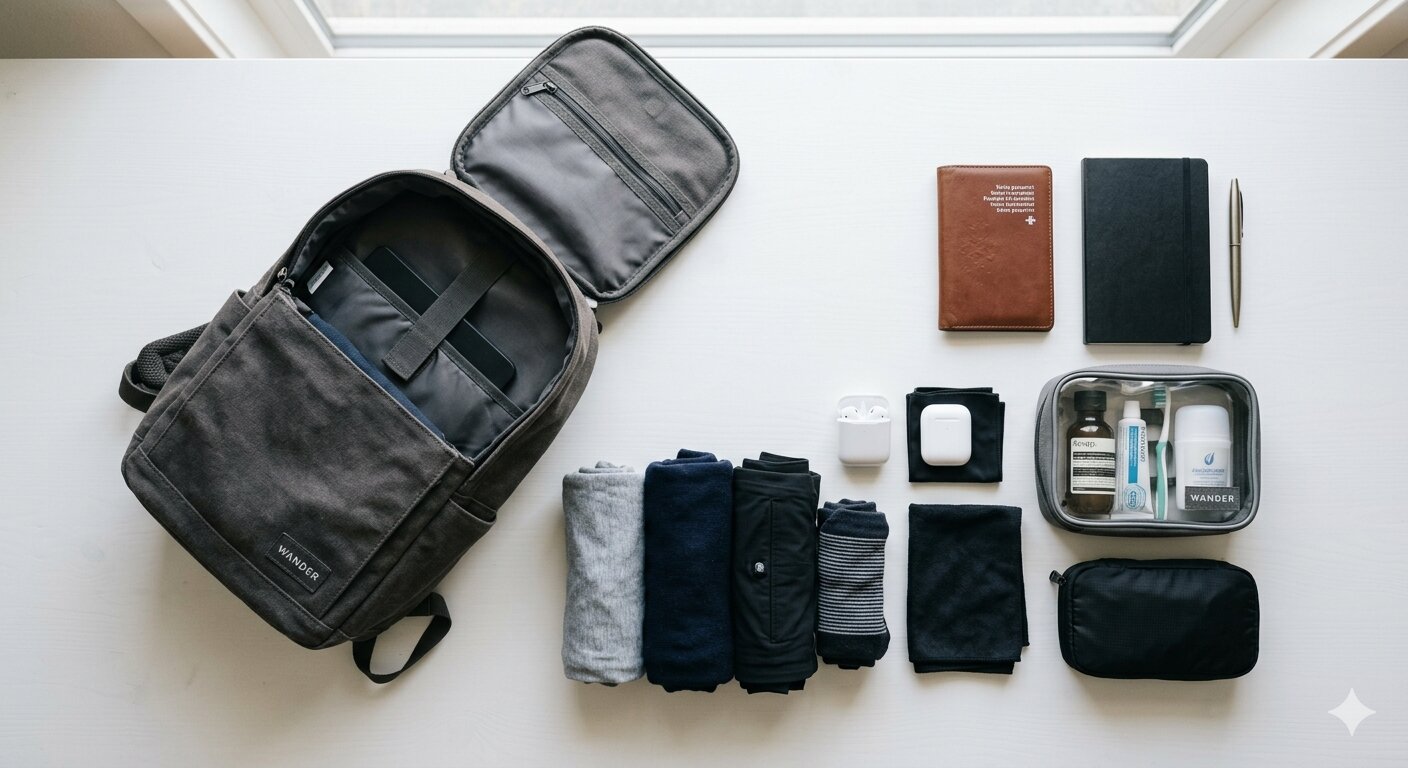
There's a moment at every airport baggage carousel where you see someone wrestle a 30-kilo suitcase off the belt while the person next to them strolls past with a single backpack. That second person isn't missing anything — they've just figured out how to pack smarter.
Packing light is a skill, not a sacrifice. Once you learn a few principles, you'll wonder why you ever checked a bag in the first place.
Start With a Smaller Bag
This sounds counterintuitive, but it's the single best trick for packing light: use a smaller bag. When you have a large suitcase, you fill it. When you have a 40-liter carry-on backpack, you're forced to prioritize.
A good carry-on bag (around 35–45 liters) is enough for a week-long trip in most climates. Once you commit to a smaller bag, the rest of the decisions become easier.
The Capsule Wardrobe Approach
The key to packing fewer clothes is choosing pieces that all work together. Pick a simple color palette — neutrals like black, grey, navy, and white — and make sure every top goes with every bottom. This way, five items can create ten or more outfits.
A practical formula for a week-long trip:
- 3 tops (including the one you wear on the plane)
- 2 bottoms (one worn, one packed)
- 1 lightweight outer layer
- 4–5 sets of underwear and socks
- 1 pair of versatile shoes (worn), plus flip-flops or sandals if needed
Choose fabrics that dry quickly and resist wrinkles — merino wool and synthetic blends are popular among frequent travelers for a reason.
Roll, Don't Fold
Rolling your clothes instead of folding them saves space and reduces creasing. For bulkier items like jeans or sweaters, compression packing cubes can shrink them down significantly. Packing cubes also keep your bag organized so you're not digging through everything to find a pair of socks.
The "Maybe" Pile Rule
When you're laying out what to pack, you'll end up with three piles: definitely, maybe, and no. The rule is simple: the "maybe" pile stays home. If you're not sure you'll need it, you almost certainly won't. This one habit alone can cut your packing volume by a third.
The exceptions are medications and essential documents — when in doubt, bring those.
Toiletries and Extras
Toiletries are a common space trap. Swap full-size bottles for travel containers or solid alternatives (shampoo bars, solid deodorant). Most hotels and Airbnbs provide basics like shampoo and soap anyway.
For electronics, bring only what you'll actually use. A phone and its charger cover most needs. Leave the laptop at home if you can get by with a phone or tablet.
Use a Packing List (Seriously)
The biggest reason people overpack is anxiety — the fear of forgetting something important. A good packing list eliminates that anxiety and keeps you honest about what you actually need. When everything is written down, you can pack confidently without throwing in extras "just in case."
A few apps can help you build and manage packing lists:
- Auto Pack — Uses AI to generate a packing list based on your destination, trip dates, and planned activities. Adjusts for weather automatically so you don't have to guess.
- Packr — Template-based packing lists with categories for different trip types. Good for building reusable lists.
- Google Keep — Not a dedicated packing app, but its simple checklist format works well if you prefer a minimalist approach.
Having a go-to list also means you can pack faster. Some frequent travelers keep a permanent list that they adjust slightly for each trip rather than starting from scratch every time.
The Bottom Line
Packing light comes down to being intentional. Use a smaller bag, choose versatile clothing, cut the "maybe" items, and trust a list instead of your anxiety. You'll move faster through airports, skip baggage fees, and spend less time managing your stuff — which is the whole point of traveling in the first place.